A New Kind of Mission
Five Organizations Changing Veterans’ Lives After Service

Leaving the military means stepping out of a life built on discipline, structure, community, and sacrifice—and into a world that can suddenly feel uncertain and unfamiliar. The mission is no longer clearly defined. The people beside them may no longer share the same experiences. The routines, responsibilities, and sense of purpose that once shaped each day can disappear almost overnight.
Returning home is often spoken of as an ending, but for many veterans, it is the beginning of an entirely different kind of mission: learning how to carry everything service demanded of them into a civilian world that may not know how to understand it.
The uniform comes off, but injuries remain. The structure of military life disappears, but the need for purpose does not. Some veterans return to homes that no longer meet their physical needs. Others face invisible wounds, unemployment, isolation, or the frightening reality of having nowhere to live.
Across the country, organizations are working to meet those challenges—not simply by offering temporary assistance, but by helping veterans reclaim independence, community, and direction.
These five organizations serve in very different ways, but each is built around the same belief: those who served should never have to face the road home alone.
1. Homes For Our Troops
Building more than a place to live
For a severely injured veteran, an ordinary home can be filled with barriers most people never notice.
A doorway may be too narrow for a wheelchair. A countertop may be impossible to reach. A bathroom may require assistance every morning and every night. Even the simplest routines can become reminders of what has changed.
Homes For Our Troops works to change that reality by building and donating specially adapted custom homes for severely injured post-9/11 veterans. The homes incorporate features such as wider hallways, automatic doors, roll-under sinks and counters, accessible shelving, generators, and other adaptations designed to support greater independence.
The value of that work reaches far beyond construction.
An accessible home can give a veteran the ability to prepare a meal, move freely through a room, care for a child, or complete an everyday task without asking for help. It can also ease the responsibilities carried by spouses, parents, and caregivers.
Homes For Our Troops is not simply changing where veterans live. It is helping restore choice and control to people whose injuries have already taken so much of both.
A home cannot erase what happened. But it can create a place where rebuilding becomes possible.
Learn more about Homes For Our Troops at www.fhotusa.org


2. Give an Hour
Supporting the wounds unseen
Some of the most difficult wounds to carry are the ones no one else can see.
Veterans may return home with grief, anxiety, depression, post-traumatic stress, or experiences they have never fully spoken about. Even when someone recognizes that they need support, cost, availability, stigma, or fear of being misunderstood can make reaching out feel overwhelming.
Give an Hour helps remove some of those barriers by connecting members of the military community with confidential, no-cost mental-health care and resources. Its services support veterans, active-duty service members, reservists, National Guard members and, in certain circumstances, spouses and caregivers.
The name itself carries a meaningful idea: help does not always begin with a sweeping solution. Sometimes it begins with a professional offering an hour, and someone else finding the courage to use it.
That first conversation may not resolve years of pain. It may, however, interrupt isolation. It may give language to something that has remained buried. It may remind a veteran that needing support is not a failure of strength.
Military service teaches people to endure discomfort and continue the mission. Give an Hour creates space for another kind of courage. The kind to stop, speak honestly, and allow someone else to help carry the weight.


3. U.S.VETS
Creating a path toward stability and independence
Few circumstances reveal the gaps in a support system more clearly than a veteran without a safe place to sleep.
The latest national Point-in-Time Count found that 32,495 veterans were experiencing homelessness on a single night in January 2025. Of those, 18,977 were staying in shelters or transitional housing, while 13,518 were unsheltered.
Veteran homelessness is rarely the result of one isolated event. It may emerge through a combination of financial hardship, unemployment, trauma, health challenges, family instability, or the difficulty of transitioning into civilian life. Because these circumstances are often connected, lasting support must go beyond providing temporary shelter.
U.S.VETS helps veterans and their families achieve stability and independence through housing, mental-health and wellness services, employment assistance, substance-use treatment, individualized case management, and access to essential resources. The organization operates programs in several states, including Arizona, California, Hawaii, Nevada, Texas, and the District of Columbia.
Housing may be the essential first step, but it is not always the final one.
A veteran may also need help finding meaningful work, navigating benefits, rebuilding financial security, receiving counseling, overcoming substance use, or reconnecting with a supportive community. U.S.VETS approaches homelessness as more than the absence of a physical address. It is a loss of stability that may require several forms of coordinated support to overcome.
The work is practical, but it is also rooted in dignity.
A veteran who has fallen on hard times is not defined by the lowest moment of their life. With the right support, that moment can become a turning point rather than an ending.


4. Higher Ground
Rediscovering what is still possible
Healing does not always take place in a medical office.
Sometimes it happens on a mountain, along a trail, beside a river, or in the moment someone attempts something they once believed was no longer possible.
Higher Ground uses adaptive recreation and therapeutic programming to help veterans, first responders, and individuals with disabilities build confidence, independence, resilience, and community. Its programs include activities such as skiing, cycling, hiking, camps, clinics, and other outdoor experiences adapted to different abilities.
For veterans whose identities were once closely tied to physical ability, teamwork, and completing difficult missions, injury can create a profound sense of separation from the person they used to be.
Adaptive recreation does not ask participants to ignore those changes. It helps them discover what remains possible within them.
A challenging outdoor experience can restore trust in the body. Completing a new skill can rebuild confidence. Sharing the experience with other veterans can recreate the camaraderie that many deeply miss after leaving military service.
The activity may be the visible part of the program, but the deeper work is often internal.
Higher Ground gives veterans an opportunity to move forward, not by returning to exactly who they were before, but by discovering who they can still become.


5. Deep Sea Valkyries
Finding calm beneath the surface
Deep Sea Valkyries was created for veterans and first responders who know how to function under extreme pressure but may never have been given the space to process what that pressure cost them.
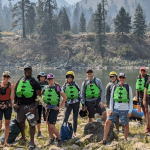
Its immersive Valkyrie Voyages bring participants together for week-long retreats combining licensed trauma counseling, scuba diving, peer connection, and spiritual reflection. The organization describes this approach through three connected areas of healing: mind, body, and soul.
Underwater, the world changes.
Noise fades. Movement slows. Breathing becomes deliberate. A diver must remain present, trust the people around them, and respond to pressure without surrendering to panic.
Those same skills can carry meaning far beyond the dive itself.
For veterans living with post-traumatic stress or moral injury, scuba can offer a rare experience of weightlessness, focus, and freedom from the demands waiting above the surface. Back on the boat, licensed counseling and guided conversations give participants room to confront experiences that may have remained unspoken for years.
Just as important is the community built during the voyage.
Deep Sea Valkyries brings together people who do not require lengthy explanations of military culture, trauma, or the instinct to hide pain behind humor and competence. Participants are surrounded by peers who understand that healing is not weakness and that survival does not have to be a solitary act.
The organization has served veterans and first responders nationwide since 2016, creating a confidential environment where participants can step away from daily life and focus fully on recovery.
Deep Sea Valkyries does not promise that one voyage will erase every struggle. It offers something more honest: a place to breathe, reconnect, and begin again.
Learn more about Deep Sea Valkyries www.deepseavalkyries.com


The Mission Continues
There is a tendency to speak about veterans primarily in the past tense.
We remember where they served, what they endured, and what they sacrificed. Those stories matter. They deserve to be preserved and passed forward.
But honoring veterans must also be a present-tense commitment.
It means caring about the home a wounded veteran returns to. It means making mental-health support easier to reach. It means ensuring that no one who served is left without shelter, community, or a reason to believe that life still holds possibility.
At Praesidus, supporting veterans is not separate from what we do—it is central to who we are. We regularly dedicate proceeds from select sales and initiatives to veteran communities, work alongside organizations such as Deep Sea Valkyries, and have been fortunate to build meaningful personal relationships with the people behind these missions. Pass the Torch was created from that same commitment: to honor veterans, service members, and those who choose to serve something greater than themselves.
The organizations featured here do not all serve veterans in the same way, because veterans do not all need the same thing. What each organization offers is a different form of the same message:
Your service is part of your story, but it is not the end of it.
The road forward may look different than expected. It may require help, courage, patience, and people willing to walk beside you.
But there is still a road forward.
For more resources dedicated to supporting veterans, visit the Veterans Resource page at
