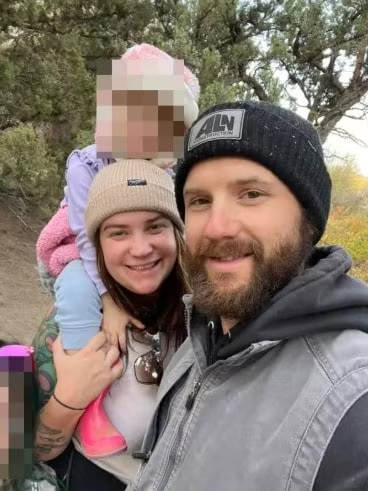
The Weight of a Hero
The story of Kaylub Giamanco, a father’s extraordinary courage, and the burden of protecting others when the unimaginable becomes reality.

There are moments in life that divide time into two distinct halves. A before and an after. Moments that arrive without warning, offering no opportunity to prepare, and leave the people who experience them forever connected to something they never could have imagined.
For Kaylub Giamanco, a 36-year-old father of two from Bend, Oregon, that moment came on an otherwise ordinary Thursday afternoon.
On October 15, 2026, Giamanco was passing Silver Rail Elementary School, where his two young daughters attended classes, when he became aware of an armed individual entering the building. Inside those walls were hundreds of children and educators who had begun their morning with the same expectation shared by families across the country: that school was a place where children could learn, grow, and return safely home at the end of the day.
But that afternoon, the familiar routines of childhood were shattered by gunfire.
A 16-year-old former student had forced his way into the school with a shotgun and opened fire. As the attack unfolded, an educator inside the building physically confronted the gunman, attempting to stop the violence. Giamanco, who legally carried a firearm, followed the attacker into the school and ultimately fatally shot him, bringing the assault to an end before police arrived.
Authorities credited the actions of both the teacher and Giamanco with preventing further loss of life.
Yet even with their extraordinary intervention, the tragedy had already taken a devastating toll. Three children, ages five, eight, and eleven, and 25-year-old teacher Megan Lambert had been killed. Another child and educator were seriously wounded.
In the days that followed, Giamanco was called a hero by officials, neighbors, and strangers across the country. His actions had undoubtedly saved lives, and in a moment when helplessness might have seemed overwhelming, he had demonstrated remarkable courage.
But behind the headlines, there was another story beginning to emerge. One that reminds us that acts of heroism, however extraordinary, are still carried out by ordinary human beings.
And sometimes, the heaviest part of courage comes after the danger has passed.

The Weight of a Hero
We often imagine courage as something that reveals itself in a single defining moment. A soldier holding his position under enemy fire, a firefighter entering a burning home, or a stranger reaching into danger to save someone they have never met. We remember the decision, the action, and the lives that were changed because someone was willing to act when others could not.
What we rarely consider is what happens to that person afterward.
For Kaylub Giamanco, the decision to protect the children inside Silver Rail Elementary also meant confronting a reality that no parent should ever have to experience. In order to stop a person who was taking innocent lives, he had to take a life himself.
There is nothing simple about that truth, nor should there be. Even when force is used to protect others, the experience can carry profound emotional consequences. The necessity of an action does not automatically make its memory easier to bear, and the knowledge that lives were saved does not erase the grief of those who could not be reached in time.
In an interview with CBS Sacramento, Giamanco’s mother, Kenda Freeman, described speaking with her son in the aftermath of the shooting. She recalled telling him how proud she was, reminding him that his actions had saved lives and that he had done the right thing.
According to Freeman, his response was painfully simple.
“Mom, I couldn’t save them all.”
While much of the country was beginning to celebrate the lives he had saved, his mother’s account suggested that Kaylub was also struggling with the lives that had been lost.
Freeman described her son’s distress and the painful questions he was asking himself about whether anything could have been done differently. Her words offered a glimpse into the human experience behind a story that could otherwise have become little more than a headline about a heroic intervention.
There is something deeply heartbreaking about the expectation that those who demonstrate extraordinary courage should also possess an extraordinary ability to live with its consequences.
We ask people to be brave in moments of unimaginable danger, yet we sometimes forget that bravery does not make them impervious to grief, fear, regret, or the complicated emotions that can follow traumatic experiences.
Giamanco did not enter that Thursday expecting to become part of a national conversation. He was a contractor, a father, and a member of a community where his daughters were growing up. His life was made up of the ordinary things that fill most of ours: work, family, responsibility, and the hope of seeing those we love safe at the end of each day.
Within minutes, he had been forced to confront a situation that most people will never experience, making a decision with consequences far beyond anything an ordinary afternoon should demand.
His courage deserves recognition, but so does his humanity.
We cannot know how he will process the events of that day or what the years ahead may bring. Those are deeply personal parts of his story that belong to him and his family. What we can recognize is that the sacrifice involved in protecting others does not always end when the immediate threat has disappeared. Sometimes it includes the emotional weight of having witnessed the unimaginable and the difficult work of finding peace afterward.
And no amount of public praise can do that work for someone.

Four Lives That Deserved More Time
In recognizing the courage that stopped the shooting, we must also remember the lives that were lost before it ended.
Among them was Megan Lambert, a 25-year-old educator who had only recently begun what she regarded as her dream career. Remembered by those who knew her for her compassion and dedication to children, Lambert had devoted herself to a profession centered on helping young people learn and flourish.
Five-year-old Rhoam Summer was another of the victims. His family remembered an energetic, adventurous child who loved climbing, reading, and collecting stuffed animals. The kind of ordinary childhood details that reveal just how much of a life exists beyond a name in a news report.
Two other young students, ages eight and eleven, were also killed.
Each life represented an entire world of relationships, dreams, routines, and possibilities. Families who expected more birthdays, more school mornings, more holidays, and more of the countless small moments that make a life together.
Their absence will be felt in ways no statistic can adequately describe.
Another child and teacher survived with serious injuries, while students, educators, families, and first responders were left to reckon with the events of that afternoon.
It is important to remember, too, the educator who physically confronted the attacker. While Giamanco’s intervention brought the shooting to an end, that teacher’s decision to challenge an armed assailant demonstrated another remarkable act of courage. Authorities have credited both individuals with helping prevent further casualties.
There was no single person untouched by the tragedy, and its effects will extend far beyond the walls of the school.
The courage shown that day deserves to be remembered alongside the people whose lives were stolen, never at their expense.
When the Unthinkable Becomes Familiar
The tragedy in Bend is part of a much larger reality that American families have been struggling to confront for years.
For generations of children, school has become a place where learning multiplication tables and making friends may exist alongside practicing emergency lockdowns and discussing what to do if a dangerous person enters the building.
These precautions are intended to protect young lives, but their very necessity reflects something deeply troubling about the world children are being asked to navigate.
According to Education Week, which tracks shootings on K–12 school property that result in firearm-related injuries or deaths, 239 such incidents occurred in the United States between January 2018 and December 2025. The figure reflects a specific reporting definition rather than every incident in which a firearm was discharged near a school.
The numbers are significant, but their human meaning is even greater. Behind them are children who have learned to associate classrooms with the possibility of violence, families whose sense of security has been shaken, and communities forced to rebuild trust in places that should have remained safe.
School shootings are not an inevitability of childhood, nor should we ever allow their repetition to make them seem acceptable.
Protecting children requires more than our collective grief after tragedy strikes. It demands serious attention to prevention, effective safety measures, responsible policies, access to mental health support, and meaningful collaboration among families, schools, communities, and public institutions.
These are complicated issues, and people may disagree about the most effective solutions. But there should be nothing complicated about the shared responsibility at their center: children deserve to feel safe, and the adults entrusted with their well-being have an obligation to work toward that goal.
Beyond the necessary conversations about policy and security lies another question worth examining.
What kind of courage are we teaching the next generation?
The Courage We Teach
There is a common misconception that strength and compassion exist at opposite ends of a spectrum. That kindness requires passivity, that standing up for oneself requires aggression, or that a gentle person must somehow be less capable of protecting themselves and others.
But perhaps one of the most important lessons we can offer children is that these qualities are not opposites at all.
True confidence can exist alongside humility. Compassion can be accompanied by firm boundaries. And courage does not always mean confronting danger head-on; sometimes it means knowing when to speak, when to ask for help, when to remove oneself from harm, and when to stand beside someone who cannot stand alone.
According to the Centers for Disease Control and Prevention, 19 percent of American high school students reported experiencing bullying on school property in 2023. While bullying and school shootings are distinct problems that should not be conflated, the prevalence of bullying reminds us that many children are already navigating situations that challenge their confidence, sense of belonging, and personal safety.
Teaching young people how to recognize mistreatment, advocate for themselves, support vulnerable peers, and seek help from trusted adults is an important part of creating healthier communities.
So, too, is helping them develop a healthy understanding of personal boundaries and self-worth.
Age-appropriate self-defense education, when grounded in responsibility and restraint, can offer lessons that extend well beyond physical technique. Awareness of one’s surroundings, emotional regulation, de-escalation, respect for others, and understanding when to seek safety are all valuable life skills. Physical self-defense, where appropriate, should be taught with the understanding that its purpose is protection rather than domination.
The goal is not to raise children who are eager for confrontation, but children who understand that kindness does not require accepting mistreatment and that having the ability to protect oneself comes with a responsibility to exercise sound judgment.
Equally important is fostering empathy, belonging, and the willingness to intervene safely when someone else is being hurt. Standing up to a bully may mean offering friendship to someone who has been excluded, reporting harmful behavior, or refusing to participate in another person’s humiliation.
These seemingly small acts of courage matter because they help shape the culture in which children grow.
None of these lessons should be mistaken for a solution to school shootings on their own. Nor should any child ever be expected to confront an armed attacker. The responsibility for preventing violence belongs to the adults, institutions, and systems capable of providing meaningful protection.
But there is value in recognizing that the character of a society is shaped not only by the laws it establishes, but also by the values it teaches and the behavior it encourages.
If we want to build a safer, more compassionate world, perhaps we must become more intentional about teaching children that strength is not measured by their ability to intimidate, and kindness is not measured by their willingness to endure harm.
A loving society is not one without boundaries. It is one in which people learn to respect both their own humanity and that of the people around them.
And while we cannot prepare every child for every danger the world may present, we can give them a stronger foundation of self-worth, empathy, discernment, and the courage to do what is right.
The Heroes Worth Protecting
In the days following the shooting, Kaylub Giamanco and his family requested privacy. Despite the attention surrounding his actions, those closest to him have made it clear that public recognition is not what he is seeking.
That request deserves respect.
The world has a tendency to turn extraordinary people into symbols, remembering them primarily through the moments that brought them into public view. Yet behind every celebrated act of courage is a human being whose life continues after the headlines fade.
There will be families in Bend learning to live with heartbreaking absences, children who need reassurance that the world can still be safe, and educators returning to classrooms with a renewed understanding of the responsibility they carry.
There will also be a father returning to the ordinary responsibilities of his own life after experiencing something no parent should have to face.
What happened inside Silver Rail Elementary cannot be undone, and no act of courage can restore the lives that were taken. But the actions of those who intervened ensured that an already devastating tragedy did not continue unchecked.
We owe them our gratitude, just as we owe the victims our remembrance and their families our compassion.
Perhaps, though, there is a deeper responsibility that comes with honoring people like Kaylub Giamanco.
We must remember that heroes are not separate from the rest of us. They are fathers and mothers, teachers and neighbors, ordinary people whose lives are filled with the same hopes, fears, relationships, and vulnerabilities as our own. Their willingness to protect others does not make them any less deserving of protection themselves.
And perhaps the finest tribute we can offer is not simply to celebrate what someone was willing to sacrifice, but to work toward a society that asks fewer people to make such sacrifices in the first place.
A society where children can grow without fearing their classrooms. Where courage is nurtured alongside compassion, where strength is tempered by restraint, and where protecting one another is understood as a responsibility we all share.
Kaylub Giamanco’s story is one of extraordinary bravery, but it is also a reminder of the terrible circumstances that can call such bravery into existence.
He was a father before the world called him a hero, and he remains a father now.
What he did deserves our gratitude. What he experienced deserves our compassion. And whatever he carries from that day deserves the privacy, understanding, and grace that no headline can provide.
Because perhaps one of the greatest ways we can honor a hero is to remember that they, too, are someone worth protecting.